Preparing for your kitchen photoshoot
When you’ve spent months designing and installing a bespoke kitchen – specifying layouts, choosing cabinetry, refining lighting and finishes – you’ll want photos that really show off your work at its best!
A bit of thoughtful planning and preparation before your kitchen photoshoot can turn an already beautiful space into something that really connects with your future clients. Something that shows them a lifestyle, not just a kitchen.
I’m not an interior designer or stylist, but I know what works in interiors photography. Whether it’s for your website, brochure or a magazine, here are some practical tips to help you on your way to top-notch photos of your finished kitchen project.
Step One: Clean
It may sound obvious but you’d be amazed at how much I end up using my microfibre in interiors shoots!
Glossy cabinets can look clean but the camera is unforgiving and will often pick up smudges on shiny surfaces, especially in close-up details shots. So make sure you polish every surface and check from all angles.
Here’s a quick checklist of other things to look out for:
- Fingerprints on worktops and appliances
- Watermarks on taps and sinks
- Dust on shelves, plinths, and pendant lights
- Crumbs in door handles and grout lines
- Dirt on the floor, especially in the corners!
Glazing is often an important part of premium kitchen design so clean the windows and sky lights too and make sure there are no smears on the bifold doors looking out into the garden.
Step two: Declutter
The aim is to completely strip back everyday clutter to keep the focus on the design.
Get rid of any unnecessary and personal items from worktops, tables and shelves and keep appliances to a minimum (see ‘Styling’ below). So that means no paperwork, pens, chargers etc. or a fridge door covered in kids fingerpainting!
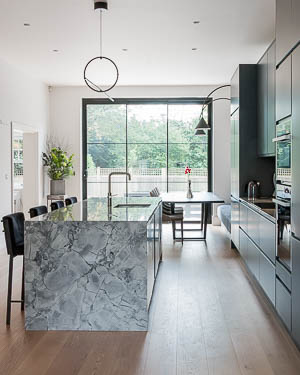
Islands should be mostly clear to showcase the worktops and craftmanship, and in open plan spaces ensure the dining area is given the same treatment.
Tidy and clean the insides of drawers and cupboards if they are a design feature and will be photographed open, such as spice drawers and pantry areas.
Hide the Practical Stuff
A bespoke kitchen should look seamless, and concealing functional elements reduces the visual noise and allows the design and feel to shine through in the photos.
- Hide bins, recycling systems, and pet bowls/beds.
- Put away dish racks, washing up-liquid, cloths etc.
- Towels should be clean and hung or folded neatly. Decide whether tea towels belong at all!
- Remove cables, routers, chargers.
Step three: Styling
This a biggie! Your photos won’t just be selling a bespoke kitchen, they will be selling a way of living. There’s a big difference between a styled kitchen and a lived-in one!
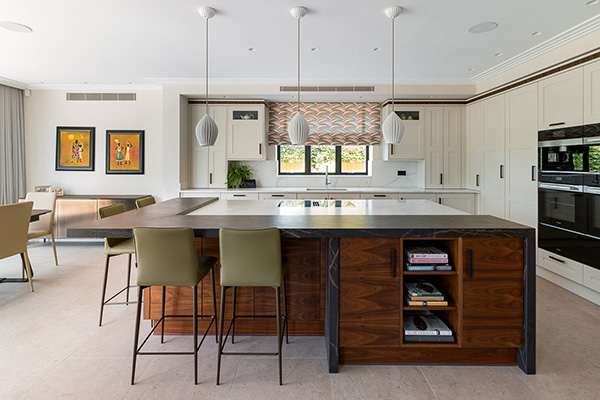
For open plan kitchen/dining areas it’s important to remember that the areas will be photographed as a whole. So it’s key that there is cohesion between the kitchen and dining styling.
Once you’ve decluttered the entire space, make sure all chairs/stools are aligned, rugs/cushions are straightened and use props to hide sockets if possible. And then check the sightlines through to other parts of the home. Consider what’s visible through doorways and windows!
Choosing the right props
Using carefully selected props can add a welcoming and warm touch to your photos but they shouldn’t outshine the kitchen.
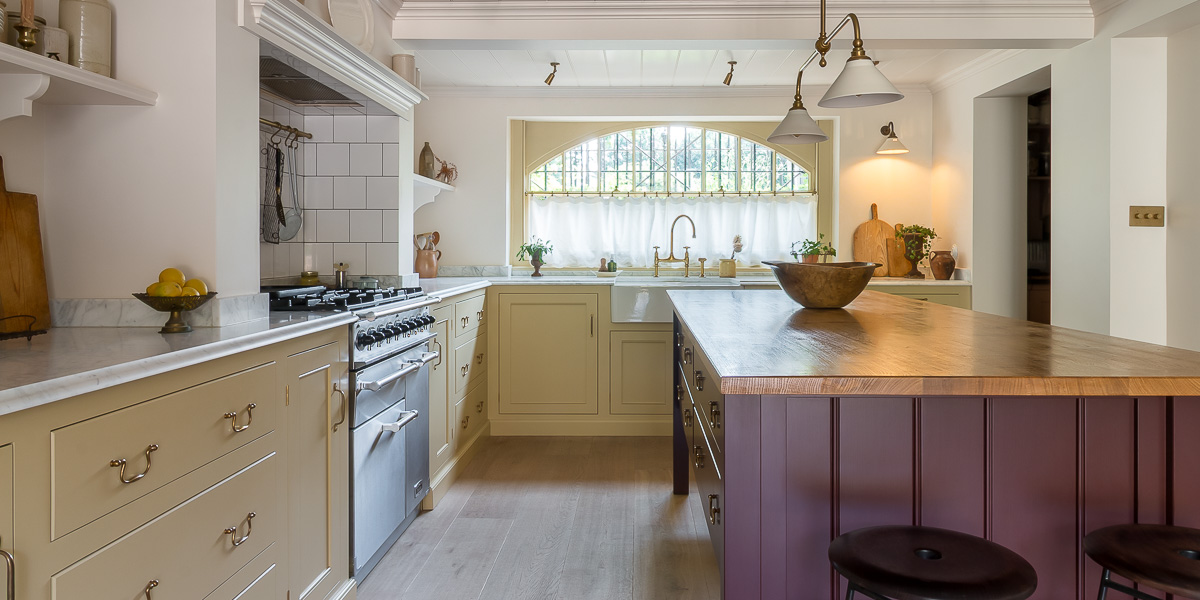
Try to match your props to the kitchen’s style – think simple and subtle touches for a minimalist kitchen, while farmhouse kitchens can handle more rustic accessories. For white or neutral kitchens you may want to add an element of colour with flowers, a fruit bowl and cookbooks.
Here are some ideas for props you can use to style your kitchen for a photoshoot:
- In the cooking area add a utensil pot, a tray of small oils, salt and pepper mills, a stylish knife block, or a coordinating towel on the handle of the range.
- Long kitchen counters can look a bit bare if totally decluttered, so you could leave a small appliance like a stylish toaster or coffee machine.
- Chopping boards always look great leaning against the tiles – try layering two or three (also useful for hiding plug sockets!)
- And glass storage jars with ingredients like beans, pasta etc. can fill space and make a kitchen look more homely without being too distracting.
- At the sink leave a stylish handwash container, or if the sink is by a window sill add a few small items like a plants or living herbs.
- A large bowl of fruit or a vase of flowers usually works on the kitchen island, or a chopping board and knife with something freshly cut.
- For stylish open shelving try some nice cookbooks, a teapot or small plants such as succulents or living herb pots. To add height you could include a tall jug or large plate propped on a stand.
- Set the dining table simply. Even if it’s just a place setting for two it will help people imagine themselves sitting there.
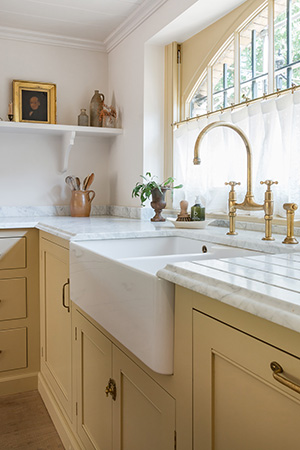
Remember we’re aiming to enhance the space, not distract from it. Avoiding clutter but adding a human touch to bring warmth to the space.
Lighting
Lighting is an important part (and selling point!) of kitchen design so make sure you show off this feature by using what you’ve installed.
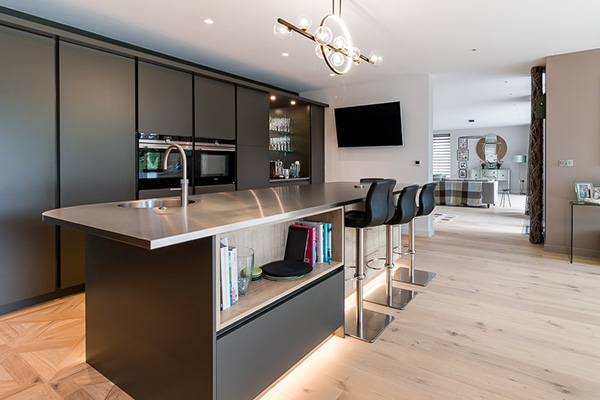
- Switch on under-cabinet, plinth and internal cabinet lighting.
- Make sure all the lights are working and if possible change bulbs so that colour temperature is consistent across all the lights.
- In open plan areas switch on dining pendants and lamps.
- Dim lights where possible to avoid harsh pools of brightness.
Your photographer will probably balance natural and artificial light during the shoot, but preparation helps enormously. To maximise natural light:
- Clean windows, roof lights and bi-fold doors.
- Open blinds/curtains fully.
- Move cars from the drive if they block light or views, or are reflected in anything.
Step Four:
Don’t forget the surrounding areas
I’ve mentioned checking the sightlines through to other living spaces to make sure there are no distractions, but it works the other way too.
I often photograph a kitchen through a doorway, from the hall for example. It gives the kitchen some context and acts as a natural frame drawing the viewer’s eyes into the room. Just make sure that hall area is looking its best too!
Windows may also need a bit of attention. Some of the interior kitchen photos are likely to include views to the outside, so give windows and bifold doors a good clean on both sides to make sure there are no smears.
And again don’t forget to pay attention to the outside as it will become part of the photograph. Tidy patio areas, garden furniture and any planting visible from the inside and remove distractions in the garden such as kids toys, dustbins, garden hose etc.
Step Five: Working with a professional interiors photographer
Plan your shot list
An experienced kitchen photographer will have a good idea of the shots they want to capture, but it’s also important that you add some input.
There are three main types of interiors photos:
- The hero shot is a wide-angle image that aims to show as much of the space as possible. There are usually just one or two of these depending on the size of the area, and it’s the one I always start with.
- The navigator shots guide the viewer through the space and help them mentally piece together the layout.
- The details shots are the ones that bring out the ‘personality’ of the space and where you can show off the different design elements and special features.
To get the most out of your shoot identify the key features that make your kitchen project special. It could be a statement island or worktop, bespoke joinery details or architectural lighting.
Be prepared…
…for your photographer to make some adjustments on the day! They will likely move small items/props and tweak chairs/stools etc. but these micro-adjustments will make a big difference to the finished image. It’s not fussiness, it’s part of the process of getting great images!
And a final tip, make sure you’ve taken a selection of before photos so you can do a ‘before and after’ post to show people the stunning transformation!
About Me

If you design or install bespoke kitchens and would like imagery that reflects the quality of your work, I’d love to help. I work with kitchen designers and contractos across south east London and Kent to create refined, natural photographs that showcase craftsmanship, layout and design — perfect for websites, brochures, awards entries and editorial features.
Feel free to get in touch to discuss an upcoming project, or to plan photography for your latest installation.